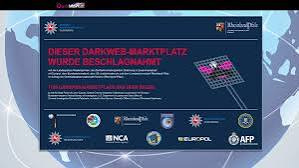
The growth of cryptocurrency has transformed how people access digital financial services. At the same time, the technology has also been exploited by criminal networks seeking fast, pseudonymous, and borderless methods of moving funds.
The term “Castro CC” is associated with illicit payment-card data ecosystems. Its broader significance lies in what such criminal activity reveals about the challenges facing the cryptocurrency industry: accessibility, trust, identity verification, fraud prevention, and the need for stronger security standards.
Rather than viewing underground markets Castrocvv as legitimate marketplaces, businesses and cybersecurity professionals should examine them as warning signs of weaknesses that the broader digital-finance ecosystem must address.
The Relationship Between Crypto and Marketplace Accessibility
Cryptocurrency can make financial services more accessible by allowing users to transfer digital assets without relying entirely on traditional banking infrastructure.
However, accessibility also creates challenges.
A system that is easy for legitimate users to access may also be attractive to criminals. This creates a difficult balance between:
- User convenience
- Privacy
- Regulatory compliance
- Fraud prevention
- Identity verification
- Financial inclusion
The future of crypto marketplaces will depend on how effectively platforms manage this balance.
What Illicit Payment Ecosystems Reveal
Criminal payment-data markets demonstrate that online financial systems are interconnected. A compromised payment card, stolen account, or breached database can create risks far beyond the original victim.
These ecosystems highlight the need for stronger:
- Account security
- Identity protection
- Fraud monitoring
- Transaction analysis
- Data protection
- Cross-platform intelligence sharing
For legitimate crypto companies, the lesson is clear: accessibility must be supported by strong security controls.
The Growing Importance of Identity Verification
Cryptocurrency platforms are increasingly expected to verify users and monitor suspicious activity.
Identity verification can help platforms:
- Reduce fraudulent account creation
- Prevent account takeovers
- Identify suspicious behavior
- Support investigations
- Protect legitimate customers
However, verification systems must also protect user privacy and personal data.
The challenge is not simply collecting more information. It is collecting the right information, protecting it properly, and using it responsibly.
Risk-Based Access May Shape the Future
Future crypto marketplaces may increasingly use risk-based systems to evaluate activity.
Instead of treating every transaction the same, platforms may analyze factors such as:
- Login behavior
- Device history
- Transaction patterns
- Geographic inconsistencies
- Account age
- Unusual changes in behavior
This approach can help platforms identify suspicious activity while reducing unnecessary friction for legitimate users.
The Role of Blockchain Analytics
Blockchain transactions can provide valuable information for detecting suspicious financial activity.
Specialized analytics systems may help identify:
- Unusual transaction patterns
- Connections between known suspicious addresses
- Rapid movement of funds
- High-risk transaction behavior
These tools can help exchanges and financial institutions improve their monitoring capabilities.
However, blockchain analysis is not a complete solution. It must be combined with account security, fraud prevention, human review, and appropriate legal processes.
Accessibility Must Include Safety
A marketplace is not truly accessible if users are constantly exposed to fraud, account theft, or financial abuse.
Future platforms will need to focus on safe accessibility by offering:
- Clear user interfaces
- Strong authentication
- Transparent policies
- Reliable customer support
- Fraud warnings
- Secure account recovery
Security should be built into the user experience rather than added as an afterthought.
The Importance of Consumer Education
Many financial scams succeed because users do not recognize warning signs.
Crypto platforms can help by educating users about:
- Phishing
- Fake support agents
- Investment scams
- Wallet theft
- Social engineering
- Irreversible transactions
Clear educational information can reduce fraud and improve user confidence.
Privacy and Security Must Coexist
One of the most important debates in the future of digital finance will involve privacy.
Users want financial privacy, while regulators and security teams need tools to detect fraud and criminal activity.
The future may involve more sophisticated systems that attempt to balance these interests through:
- Privacy-preserving technologies
- Strong data governance
- Limited data retention
- Secure identity systems
- Risk-based monitoring
The goal should be responsible access rather than unrestricted anonymity or excessive surveillance.
How Businesses Can Prepare
Companies operating in digital finance should take several steps to prepare for evolving threats.
They should:
- Implement multi-factor authentication.
- Monitor accounts for unusual activity.
- Protect customer data.
- Assess third-party risks.
- Maintain incident-response plans.
- Train employees about social engineering.
- Use appropriate fraud-detection systems.
- Regularly review security controls.
Businesses should also assume that attackers will continue adapting their methods.
The Future of Crypto Marketplace Access
The future of cryptocurrency marketplaces will likely involve a combination of convenience and stronger safeguards.
Platforms may become more accessible through:
- Simpler user interfaces
- Better mobile applications
- Improved account recovery
- Faster verification processes
- Broader financial integration
At the same time, security requirements may become more sophisticated.
The most successful platforms will likely be those that make secure behavior easy for ordinary users.
Conclusion
“Castro CC” is best understood as part of the broader discussion surrounding illicit payment-data ecosystems and the security challenges facing digital finance. It should not be viewed as a legitimate marketplace model or a source of opportunity for crypto users.
Its broader lesson is that accessibility without adequate protection can create serious risks.
As cryptocurrency marketplaces continue to evolve, the future will depend on finding a responsible balance between convenience, privacy, compliance, and security. Platforms that prioritize user protection, intelligent fraud detection, strong identity controls, and clear education will be better positioned to build trust.
The future of crypto marketplace accessibility should not simply be about making digital finance easier to reach. It should be about making access safer, more transparent, and more resilient against the threats revealed by underground financial ecosystems.